Fall Building Maintenance Checklist for Commercial Sites
Fall is the critical window to prepare your commercial building for winter in Indiana. If you manage a commercial property, having a proper maintenance plan is not optional. It is the difference between a smooth winter and expensive emergency repairs that can shut down your operation for days. In Indianapolis, the first freeze comes without warning and buildings that are not ready suffer major damage to floors, ducts and entrances. This guide is built for property managers who want to protect their investment before winter.
Fall Building Maintenance Checklist: Prep Commercial Floors
In east Indianapolis, where customer and employee traffic drags in leaves, moisture and early de-icing salt, commercial floors suffer more than in any other season. Fall in Indianapolis brings constant rain, wind and the first salt applications on nearby streets. All of that ends up inside your building if you do not have a plan.
That is why floor preparation is the first and most important item in your autumn maintenance strategy and the one that saves you the most money long term.
Deep inspection of all commercial floors before winter
Before applying any treatment, walk every area of your building with a checklist. Check for cracks in vinyl, loose tiles in restrooms, worn carpet in high traffic zones, and polished concrete with loss of gloss or moisture stains. Document everything with photos. This inspection is the foundation for an effective winter program.
Winter brings de-icing salt that destroys floor finish if there is no protective barrier. Salt acts like sandpaper, dulls the shine and penetrates grout joints. To understand the damage it causes and how to prevent slip hazards, review our guide on https://www.aokindy.com/blog/winter-commercial-floor-care-salt-snow-and-slip-risks A common mistake in east Indianapolis buildings is inspecting only the main lobby. You must also inspect service entrances, kitchens, back hallways and warehouse areas. Those are the areas where the most dirt enters and where cleaning is least frequent. If you find hollow tiles, mark them for immediate replacement.
Deep cleaning, stripping, waxing and pore sealing
Sweeping and mopping is not enough. To meet professional standards, you need a complete process. For VCT floors, stripping is required to remove old yellowed wax layers and then apply 4 to 5 coats of high-traffic finish. For carpets, you need hot water extraction with alkaline pre-spray to remove deep dust and summer stains.
For polished concrete, you need diamond polishing and lithium densifier sealer. This seals the pores of the material and prevents fall moisture from seeping in and causing white efflorescence. If your building in east Indianapolis is over 10,000 square feet, schedule this service on weekends to avoid disrupting operations. Remember that all preventive maintenance you do now links to your annual maintenance plan. Your strategy must be centralized in your Building Maintenance program. A properly sealed floor resists salt attack up to 3 times longer and reduces daily cleaning costs by 30%.
Application of high-traffic and certified anti-slip finishes
Fall is humid and winter is freezing in Indianapolis. Slip and fall accidents are the top legal claim against property managers. Apply anti-slip finishes certified by ASTM with a coefficient of friction above 0.6. This not only protects visitors, it also reduces floor wear. A common mistake is using the same summer finish.
For fall and winter, you need a higher solids finish, with at least 25% solids minimum. This finish creates a thicker, more resistant layer that does not dissolve with brine. Consult our specialists at Floor Care for the right product for your floor type. This step is essential in any https://www.aokindy.com/blog/commercial-property-maintenance-indianapolis-what-it-covers plan. In east Indianapolis, many buildings have direct entrances from the parking lot without a vestibule. Consider installing hot air curtains. The cost is paid back in just two winters through heating savings.
Planning a 3-zone mat system against salt and mud
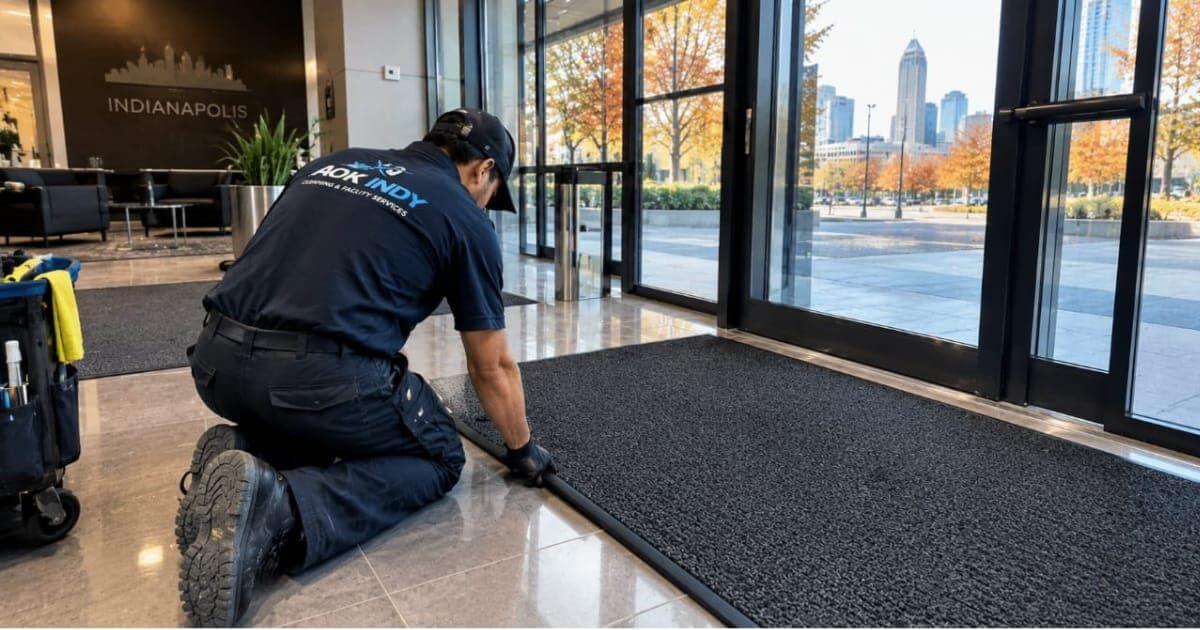
80% of the dirt in a building enters through the first 15 feet of the entrance. If you do not have a 3-zone entrance mat system, you need it now. Zone 1: exterior aluminum or rubber scraper that removes thick mud and snow. Zone 2: textured fiber mat that absorbs water and traps fine dust. Zone 3: fine nylon carpet that dries soles.
This system prevents salt from reaching the commercial floor you just restored. In east Indianapolis, where winds bring dust from industrial zones and I-70, this is even more critical. Mats must cover at least 15 to 20 feet in the direction of traffic. Rent a professional service that delivers clean mats weekly. A well-executed mat program extends the life of your floor by up to 40%.
Seasonal Facility Maintenance for Indianapolis Buildings
Seasonal facility maintenance goes beyond floors. Fall is the time to switch from summer mode to winter mode in all your systems. In Indianapolis, temperatures can drop from 70°F to 35°F in a single week in October. Your facilities must be ready for that abrupt change without your tenants noticing.
A building that does not make this transition consumes 20% more energy in winter and has twice as many emergency calls.
HVAC inspection, filter change and duct sealing
Your rooftop units have worked at maximum capacity all summer. Now they need a complete inspection. Clean condenser and evaporator coils, check belts for wear and cracks, lubricate motors and change filters to MERV 11 or higher. A dirty filter in fall becomes a frozen system in winter and poor indoor air quality.
Also, seal duct leaks with mastic, not duct tape. Hot air escaping on a roof in January is money literally burned. Studies in Indianapolis show up to 30% of air is lost through leaks in poorly sealed ducts. Schedule this inspection with your building maintenance provider. If you need help coordinating, our team at contact us can schedule a technical visit in east Indianapolis in under 48 hours.
Lighting, restrooms, roofs and common areas
Days get shorter in October. Check all exterior, parking lot and perimeter lighting. In east Indianapolis, security is key to retaining tenants. Replace buzzing ballasts, switch to LED if you have not yet, and adjust timers to the new dusk time. In restrooms, check for slow leaks that could freeze and burst in winter. Drain exterior water lines and close irrigation shut-off valves.
A burst exterior faucet can flood an entire warehouse overnight. Check your roof. Fallen leaves in autumn retain moisture and rot TPO and EPDM membranes. Clean drains, gutters and sumps. A roof that fails in winter in Indianapolis means business closures, inventory loss and lawsuits. Document everything with before and after photos.
Ducts, Mats and Entrance Sealing
This is the tripod of winter protection. If you fail at one, the other two will not work. Ducts, mats and entrance sealing must be worked as an integrated system, not as isolated tasks. Many property managers spend thousands on floors but ignore entrance sealing. The result is that the new floor is ruined in 60 days because the entrance keeps letting in water, wind and salt.
Duct cleaning and indoor air quality in fall
During summer, your ducts accumulated dust, pollen, mold spores and moisture. In fall, when you turn on the heating for the first time, all of that burns and circulates through the building. Employees get sick, absenteeism rises and you get complaints of burning odors. Professional duct cleaning with rotary brush and HEPA vacuum removes that accumulated load.
In commercial buildings in Indianapolis, we recommend duct cleaning every 2 years, but visual inspection every fall. Also verify that fire dampers close correctly and that volume dampers are open. It is a safety, code and efficiency issue. A dirty duct reduces airflow by 15% and forces the system to work harder.
Mat system as the first line of operational defense
Mats must be cleaned and rotated every week in fall and winter, not every month. Saturation of a dirty mat causes it to stop absorbing and become a source of dirt that spreads mud. Rent a service that delivers clean mats and takes dirty ones for industrial washing. Do not buy cheap mats. A good quality commercial mat retains up to 15 liters of water per square meter.
Place additional mats at service and kitchen entrances, not just the main lobby. Those forgotten points are where the most salt and grease from delivery trucks enters. Do a simple test: on a rainy day in October, watch how much water gets beyond 15 feet of mat. If water reaches the polished floor, you need more feet of mat or a more absorbent mat.
Entrance sealing, weatherstripping and air curtains
Check every exterior door with a light test. If you see daylight around the frame, cold air, water and dust are entering. Replace rubber weatherstripping that is hard or broken, adjust door closers that do not fully close and apply silicone sealant where the frame joins brick or metal panel. In buildings in east Indianapolis built in the 80s and 90s, ground settlement has created cracks that are now highways for freezing air. Professional entrance sealing can reduce your heating bill by 12% and is the fastest ROI of the entire fall plan. Do not forget loading dock doors and back employee doors. Install clear vinyl strip curtains if you do not have them.
Preparing for Winter in East Indianapolis and Greenfield
Preparing for winter in East Indianapolis and Greenfield requires understanding local differences. Greenfield, east of Indianapolis, is more rural and open to wind, which means more wind-blown snow, more ice on secondary roads and lower wind chill temperatures than downtown. East Indianapolis is more urban, with a heat island effect but with more heavy traffic pollution that dirties buildings faster and clogs air filters. Your plan must adapt to each location to be effective.
Customized snow and ice plan for each property
Do not wait until November to hire your snow removal service. In Greenfield and east Indianapolis, good contractors are booked in September and by October they have no availability. Secure a contract that includes pre-treatment with liquid brine before the storm, not just rock salt after. Brine prevents ice from bonding to concrete and uses 70% less salt, protecting your floors, concrete and the environment.
Define priority zones: ADA entrances, ramps, evacuation routes, hydrants and fire department access. Mark with stakes where sidewalks are so machines do not damage edges. Document your plan in writing and share it with all tenants so they know what to expect and where not to park during snowstorms.
Pipe protection, flood prevention and emergency kit
In East Indianapolis and Greenfield, many commercial buildings have pipes in poorly insulated exterior walls or in ceilings over dock doors. Wrap those pipes with thermostat-controlled heat tape and 1-inch foam insulation. Keep thermostats never below 55°F, even in vacant buildings on weekends and holidays. Drain and close irrigation and exterior hose valves. A burst pipe in an office building in Greenfield in January can cause $50,000 in damage in a single night.
Install WiFi water sensors with alerts in pump rooms, boiler rooms and under sinks in common areas. It is a $200 investment that prevents disasters. Also, prepare a winter emergency kit that every property manager should have on site: snow shovels, pet-friendly salt, flashlights, batteries, and your maintenance provider numbers at contact us.
Frequently Asked Questions About Fall Maintenance for Indianapolis Commercial Buildings
How often should I follow this autumn preparation plan in Indianapolis?
At least twice a year, but the fall review is the most important. Do a full review in October and a light review in March to assess winter damage and plan spring repairs. Buildings in east Indianapolis with high pedestrian and delivery traffic should check mats and floors monthly from October to March. Medical and food buildings should do it biweekly for sanitary standards.
Can I do the maintenance myself or do I need a professional?
You can do visual inspections, small mat changes and light checks, but duct cleaning, VCT stripping and waxing, and commercial entrance sealing require professional equipment, certified products and liability insurance. A poorly done sealing job can void the warranty on your doors and windows. We recommend hiring a full-service Building Maintenance provider that includes Floor Care and HVAC review to ensure results and warranty.
What is the average cost of preparing a commercial building for winter in Indianapolis?
It varies by size and condition, but for a 15,000 square foot building in East Indianapolis or Greenfield, between $3,500 and $7,000 including floors, ducts and mat rental system. It is much less than the $20,000 or more it costs to repair water damage from a burst pipe, replace 5,000 square feet of VCT damaged by salt, or face a slip-and-fall lawsuit at an icy entrance. Preventive maintenance is always cheaper than emergency repair.
ROI for Building Managers in East Indianapolis
Professional autumn preparation prevents fines for unsafe entry, reduces slip callbacks, and improves tenant Google reviews. A salt callback in an east Indianapolis building costs on average 3 hours labor plus travel and damages quality perception.
When you invest in a comprehensive fall building maintenance checklist and execute it properly, you protect your property from costly winter damage and liability exposure. Tenants notice clean, safe entrances and reliable systems. Properties that prepare for winter in advance report higher tenant retention, fewer emergency maintenance calls, and improved safety records. Building managers who skip this step often face recurring problems: slippery entrances cause slip-and-fall claims, unsealed ducts waste 30% of heating energy, and neglected floors develop permanent salt stains that require extensive restoration.
When you need building maintenance in Indianapolis for your property in east Indianapolis or in Greenfield, trust AOK Indy Management Company. Call today at (317) 775-9162 for your free estimate. We work month to month, with no contract, and leave your building ready for winter, clean, safe, and ready to impress your tenants and clients.